If you are beginning to wonder whether your child learns, communicates, focuses, processes, or responds differently than other children, you are not alone. For many parents, this stage brings mixed emotions: concern, relief, confusion, hope, grief, and a deep desire to understand what their child needs. A helpful place to begin is with the idea of neurodiversity — the understanding that human brains develop and function in many different ways, and that difference is a natural part of humanity.
That perspective matters because it changes the question. Instead of asking, “What is wrong with my child?” parents can begin asking, “How does my child experience the world, and what supports will help them thrive?” A neurodiversity-informed approach does not ignore disability, delay, or difficulty. It recognizes that a child may need therapies, accommodations, medical care, or specialized instruction without being reduced to a deficit-based view of who they are.
When families hear the term neurodiversity, they often think first of autism, ADHD, dyslexia, or other learning and developmental differences. Those absolutely belong in the conversation. But many children do not fit neatly into just one category, and their needs often overlap across education, development, communication, and health. A strengths-based lens helps families see the whole child, not just a diagnosis.
That overlap is often overlooked. Families are sometimes pushed to think in separate boxes: school on one side, health on another, behavior somewhere else, emotions in another place entirely. Real life is rarely that tidy. A child may be navigating communication challenges, sensory needs, motor planning differences, executive functioning struggles, anxiety, sleep disruption, or medical concerns all at once. In some children, that broader picture may also include hearing, vision, thyroid, heart, or sleep-related needs that affect learning and daily functioning. Good support begins when adults stop looking for a single neat explanation and start building a fuller picture of the child.
One of the most helpful things a parent can do early on is observe patterns with curiosity. When does your child seem calm, capable, joyful, overloaded, avoidant, or dysregulated? What environments help them participate? What drains them? What tasks consistently create frustration? What do they naturally gravitate toward? These observations matter because children often show us their needs long before they have the words to explain them.
It also helps to remember that neurodiversity is not a diagnosis. It is a framework for understanding variation. A diagnosis, by contrast, is a clinical or educational determination used to guide treatment, services, accommodations, or eligibility. Parents do not need to choose between being affirming and being proactive. They can do both. A child can be fully loved, respected, and seen as whole while still benefiting from evaluation, therapy, educational intervention, or mental health support.
If you have concerns, early action matters. That does not mean panic.
A good next step may be talking with your pediatrician, tracking developmental milestones, asking for referrals, seeking a developmental evaluation, or contacting your public school system if school-related concerns are affecting access to learning. In Texas, parents can request a special education evaluation if they suspect a disability may be affecting school access, and federal special education law is built around the idea that eligible students are entitled to a free appropriate public education.
Parents often need reassurance here: asking questions does not “label” a child in a harmful way. It gives you information. And information helps families make better decisions. It helps you understand what support is needed, what to ask the school for, what to monitor medically, what strategies to try at home, and how to advocate more effectively.
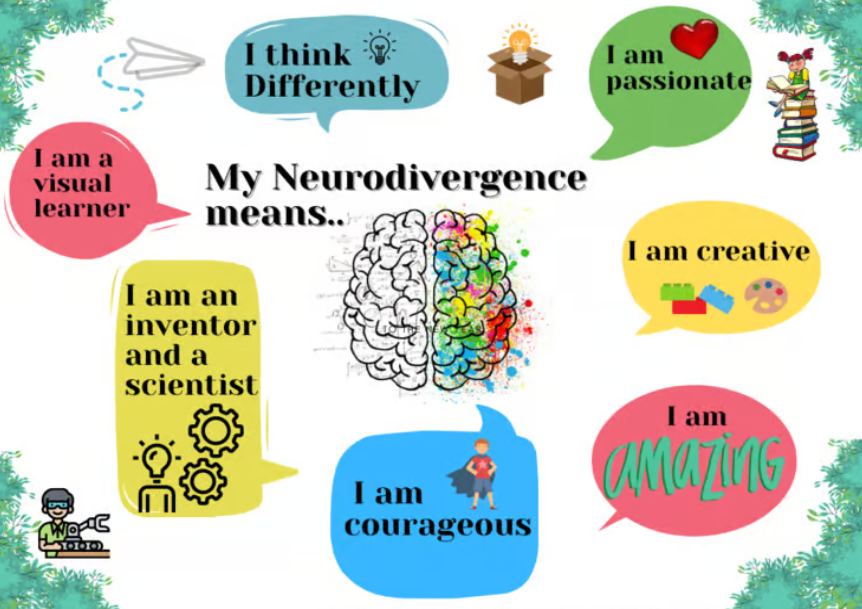
A strengths-based lens is especially important during this process. Too often, children become a list of concerns on paper: delayed speech, reading difficulty, inattention, sensory sensitivity, behavior issues. But a child may also be perceptive, funny, loving, persistent, visually strong, musically intuitive, or intensely knowledgeable in areas of interest. These strengths are not side notes. They are part of how support should be designed.
Another overlooked part of this journey is the emotional one. Many parents carry guilt when they begin to suspect that their child is struggling. Some worry they missed signs. Some feel grief for the version of parenting they thought they would have. Some feel pressure to become experts overnight. None of that means they love their child less. It means they are human, and they are adjusting. Families need room for both realism and hope.
And hope should be grounded. A neurodiversity-affirming approach does not say, “Everything is fine, so do nothing.” It says, “Your child deserves dignity, access, belonging, and individualized support.” It also recognizes that therapies and accommodations should build communication, participation, regulation, independence, health, and quality of life — not erase personality or punish difference. It asks better questions: Is my child struggling because they are incapable, or because the environment is too fast, too noisy, too rigid, too language-heavy, or not appropriately supported? Are we expecting compliance when what they actually need is communication support, sensory regulation, explicit teaching, or more time? Are we noticing their efforts, not just their difficulties?
These questions help families move from fear into understanding.
At iamnoorie.org, we believe families deserve more than labels, scattered advice, or a stack of paperwork. They deserve a framework that combines dignity with action. Understanding neurodiversity is not about lowering expectations. It is about building better, more human ones — expectations rooted in support, belonging, and a fuller picture of what a child can become.
Your child is not a problem to solve.
Your child is a person to know.
And that understanding is often where everything begins.